



loading count
loading pagination
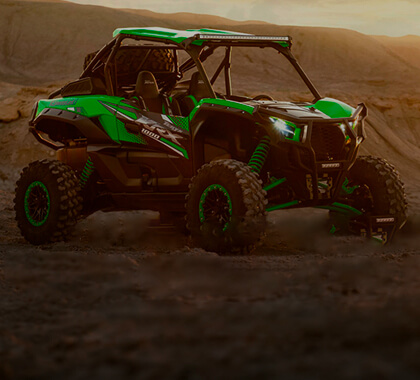
Just like you need oxygen, your Kawasaki Teryx H2 needs a steady intake of clean air, but when you're splashing through deep water crossings and charging through dusty trails that look like mini sandstorms, that clean air can be pretty hard to come by. Stock air intake setups work fine until you start getting into the really fun stuff where water and dust turn your engine's breathing system into a liability that can ruin your whole day (and your whole engine).
Everything Kawasaki Offroad offers Kawasaki Teryx H2 snorkel kit accessories designed to get your air intake up above the nasty stuff that wants to kill your engine. From snorkel riser caps that relocate your air intake to safer territory to complete kits that let you wade through water that would drown a stock machine, these breathing mods turn water and dust hazards into minor inconveniences. When you can charge through creek crossings and mud holes that make other riders turn around and find another way, you'll know your snorkel investment paid off in spades.
Here's the thing about turbocharged engines: they're basically air junkies that need constant clean air to keep making that sweet, sweet power. When that air gets contaminated with water or loaded with dust, bad things happen fast. Water ingestion can hydrolock your engine, which is about as expensive as it sounds, while excessive dust clogs filters and wears out internal components like sandpaper on steroids. Stock air intake positioning is fine for Sunday drives, but when you start hitting the trails where this machine really shines, you quickly find spots where the stock setup just can't cut it. Deep water crossings that come up to your running boards put your air intake right in the splash zone, while dusty conditions that follow other riders can choke your engine before you know what hit you. A good snorkel system moves your air pickup to where it can grab clean air instead of whatever nastiness is floating around at stock intake height.
Snorkel systems basically do one simple job: they move your air intake from down low where trouble lives to up high where the air stays clean. Your main components are intake tubes that do the key job of routing airflow to the new location, filter boxes that catch the junk before it gets to your engine and wreaks havoc, and riser caps that actually grab the air from up high where it's safer. Different riser cap sizes are designed to grab different volumes of airflow, which means your task is to get the flow that most closely matches what your engine actually needs to run well. Simply going with the biggest option isn’t necessarily a win, because oversized components can create turbulence (and undersized hardware may choke your engine wright when you need power). As with anything in life, it’s about the little things and balance, so choose carefully.
Coming prepared always works in your favor, and Kawasaki Teryx H2 snorkels are no exception. Your main goal here is to just create a path for air to travel efficiently and without adulterants getting in there and gumming up the works. Giving heat sources and moving parts a wide berth as you route your tubing is a good idea for longevity reasons. Pre-filter setups catch the big stuff before it gets to your main filter, which is huge for dusty conditions where your main filter would get overwhelmed otherwise. Don't expect snorkels to make your machine amphibious—they're about improving your odds in challenging conditions, not turning your UTV into a submarine. What you will get is the confidence to tackle water crossings and dusty conditions that would have you worried about engine damage otherwise. Plus, that distinctive snorkel look lets everyone know you're serious about going places that stop other riders.
High Lifter knows what it takes to keep engines breathing clean air when the going gets ugly, and their snorkel components are built for riders who don't mess around when it comes to protecting their investment.
Move your air intake to safer territory with this Kawasaki Mule/Teryx/KRX 2" Snorkel Riser Cap by High Lifter, giving your engine access to clean air when things get nasty down low.
Get clean breathing for smaller setups with this Kawasaki Mule/Teryx/KRX 1.5" Snorkel Riser Cap by High Lifter, perfect for applications where the smaller size fits your airflow needs just right.
Will a snorkel kit hurt my H2's performance or fuel economy?
A properly designed snorkel should have minimal impact on performance—you're basically just moving the air pickup location, not restricting airflow. Some riders actually notice improved performance in dusty conditions because the engine's getting cleaner air than it would with a clogged stock filter. Fuel economy usually stays about the same since you're not really changing how the engine breathes, just where it breathes from.
How deep can I go with a snorkel system installed?
Snorkels are about protecting your air intake, but they don't make your machine waterproof. You've still got to worry about your CVT belt, electronics, and differential vents. Once the water gets above your floorboards, you increase your risk for a number of issues affecting the above components and more.
Can I just start with riser caps only?
You sure can. A lot of riders begin with the cap to relocate their air pickup, then add pre-filters and other pieces based on the conditions they actually encounter. Starting simple lets you see what works for your riding style without going overboard on the first try.